
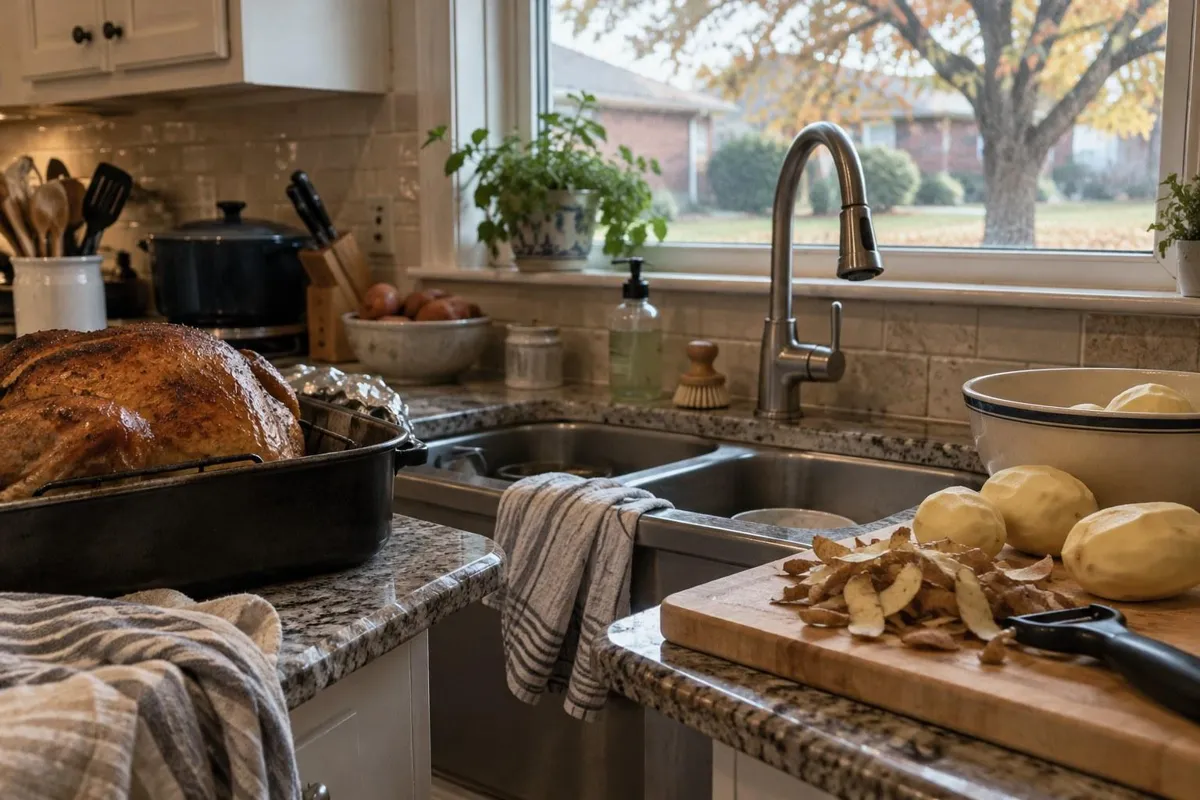
Knowing what not to put down a garbage disposal can save your Thanksgiving. The holiday is the busiest cooking day of the year in most Fort Worth kitchens, and it produces exactly the kind of scraps that jam blades, coat pipes and back up sinks: turkey grease, potato peels, bones, stuffing and coffee grounds.
At HAT Plumbing, Heating & Air, our licensed plumbers help Fort Worth homeowners keep kitchens running through the holidays, from older homes in Arlington Heights and Ridglea to newer builds on the north side. Below you will find the foods that cause the most trouble, why they do it, how to scrape and dispose of them instead, and what to do if your sink still backs up with a house full of guests.
Want your kitchen drain checked before the family arrives? Our team offers upfront, flat-rate pricing and answers the phone 24 hours a day, 7 days a week.
Key Takeaways
- Fats, oils and grease are the biggest holiday threat because they harden inside your pipes and in the city sewer once they cool.
- Starchy and stringy foods such as potato peels, pasta, rice, celery and onion skins can turn into a paste or wrap around the disposal and stall it.
- Bones, fruit pits, eggshells and coffee grounds do not grind cleanly and tend to settle in the trap and drain line.
- Run cold water before, during and after grinding, and feed scraps in small batches rather than all at once.
- If the disposal hums, the sink drains slowly, or water backs up into the other basin, stop using it and call a plumber before the problem spreads.
Why Thanksgiving Is So Hard on Kitchen Drains
Most days, a disposal handles a plate or two of scraps at a time. On Thanksgiving it may run a dozen times in a few hours while you cook, rinse and wash dishes for a crowd. That pace leaves little time for water to flush everything through.
The menu adds to the strain. A traditional Texas holiday table is heavy on starches and fats: mashed potatoes, cornbread dressing, gravy, rolls, pecan pie and a turkey that leaves a pan full of drippings. Those are the foods plumbers pull out of clogged kitchen lines.
More Cooks, More Scraps
When relatives pitch in, everyone has their own habits. One person scrapes plates into the trash, while another rinses everything into the sink and flips the switch. A short talk before cooking starts, or a note taped above the sink, keeps everyone on the same page.
Older Fort Worth Plumbing Needs Extra Care
Many homes in neighborhoods like Arlington Heights, Ridglea and Riverside have drain lines that are decades old. Older cast iron pipe can roughen inside over time, which gives grease and food particles more surfaces to cling to. A home with that kind of plumbing usually reaches a full clog faster than a newer house with smooth PVC lines.
Fort Worth's expansive clay soil also shifts as it swells and shrinks with the weather. That movement can change the slope of drain and sewer lines under a slab, which makes it easier for heavy waste to settle in low spots.
What Not to Put Down a Garbage Disposal
A disposal is designed for small amounts of soft food waste. It is not a trash can, and many of the foods that seem harmless cause the most damage. Here are the main categories to keep out of your sink this holiday season.
Fats, Oils and Grease
Turkey drippings, bacon fat, butter, gravy and the oil from a fryer are liquid while they are hot. As they move through your pipes and cool, they turn solid and stick to the walls. Each new layer catches more food, and eventually the opening narrows to the point that water barely drains.
The City of Fort Worth lists animal fats and vegetable oils among the most common pollutants of the sewer system, noting that they cool and solidify in the pipe and reduce its diameter over time. Running hot water and dish soap after grease does not solve the problem. It only moves the grease farther down the line before it hardens.
Starchy Foods That Expand
Potato peels, pasta, rice, bread, stuffing and dough absorb water and swell. Ground into small pieces, they form a thick, sticky paste that can coat the disposal chamber and settle in the trap under your sink.
Mashed potatoes are a classic culprit on Thanksgiving. A large pot of peels sent down at once can stop the drain before dinner is even served.
Fibrous and Stringy Scraps
Celery, onion skins, corn husks, asparagus ends, artichokes and pumpkin pulp contain long fibers. Instead of breaking apart, those strands wrap around the impellers and can bind the motor or knot together in the drain line.
Bones, Pits and Shells
Turkey bones are too hard for a residential unit to grind well. They can jam the flywheel, dull the parts and leave sharp fragments in the trap. Fruit pits and nut shells, including pecan shells from pie prep, cause similar trouble.
Eggshells are often suggested as a way to "clean" the blades, but the thin membrane inside the shell can wrap around parts, and the ground shell becomes a sandy grit that settles in the pipe along with grease.
Coffee Grounds
Coffee grounds do not dissolve. They pass through the disposal easily, then collect in the trap and low spots in the line, where they bind with grease into a dense sludge. Holiday guests mean more pots of coffee, so put used grounds in the trash or compost.
Things That Are Not Food
Paper towels, napkins, twist ties, foil, plastic wrap, produce stickers and utensils all find their way into sinks during a busy day. A quick check of the drain before you flip the switch can save the motor and your afternoon.
Not sure if your disposal is up to holiday duty? Our plumbers can take a look at the unit and the drain line before the big day.
Quick Reference for Holiday Kitchen Scraps
Keep this list handy while you cook. When in doubt, scrape it into the trash.
| Holiday Scrap | Okay for the Disposal? | What to Do Instead |
|---|---|---|
| Turkey grease and pan drippings | No | Let it cool in a can or jar, then throw it away or take it to a drop-off station |
| Gravy, butter and cooking oil | No | Wipe pans with a paper towel before washing |
| Potato peels and mashed potatoes | No | Trash or compost peels; scrape leftovers into the trash |
| Stuffing, rice, pasta and bread | No | Scrape plates into the trash |
| Celery, onion skins and corn husks | No | Trash or compost |
| Turkey bones and pecan shells | No | Trash |
| Coffee grounds and eggshells | No | Trash or compost |
| Small soft food bits left after scraping | Yes, in small amounts | Grind with plenty of cold water running |
How to Use Your Disposal the Right Way
Good habits matter as much as the list of foods to avoid. A few simple routines keep the unit grinding and the drain flowing.
Scrape First, Then Rinse
Keep a trash can or a lined bowl next to the sink while you cook and clean. Scrape plates and pans before they go in the sink, so only small leftover bits ever reach the disposal.
Run Cold Water and Go Slow
Turn on a steady stream of cold water before you start the disposal, keep it running while the unit grinds, and let it run for several seconds after the grinding sound stops. Cold water keeps any small amount of fat firm so the disposal can chop it and carry it away instead of letting it melt onto the pipe walls.
Feed food in slowly, a small handful at a time. Packing the chamber full forces the motor to work harder and sends large clumps into the drain.
Keep It Fresh Without Harsh Chemicals
Chemical drain cleaners can damage disposal parts and older pipes, and they rarely clear a grease clog completely. For routine freshening, grind a few ice cubes or run a little dish soap with cold water. If odors linger, our post on why your garbage disposal smells covers common causes and fixes.
Where to Put Turkey Grease in Fort Worth
The most important holiday habit is handling grease correctly. Here is how to keep it out of your pipes and the city sewer.
Cool, Contain and Toss
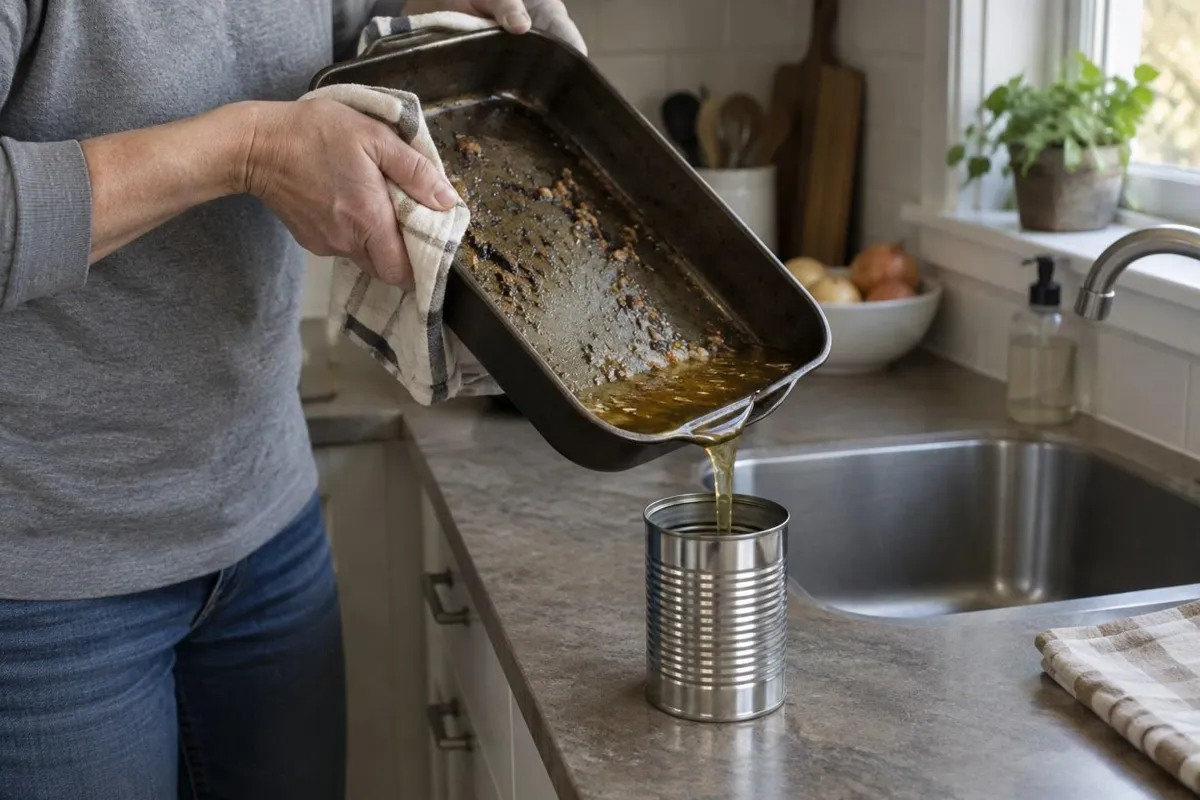
Pour drippings and cooking oil into a heat-safe container such as an empty can, a glass jar or a carton with a lid. Let it cool and harden, then seal it and put it in the trash. For a small amount, you can soak it up with paper towels first.
Before washing greasy roasting pans, wipe them out with a paper towel. That one step keeps a surprising amount of fat out of the drain.
Large Amounts From Turkey Frying
Frying a turkey can leave gallons of oil. Never pour it down the sink, into the toilet, or onto the lawn. Let it cool fully, strain it back into its original container, and either reuse it or drop it off. The city's drop-off stations accept cooking fats, oils and grease along with other household hazardous waste.
Getting Your Kitchen Ready Before Guests Arrive
A little preparation the week before Thanksgiving makes the big day much easier. These simple checks take only a few minutes and can reveal small problems while there is still time to fix them.
Test the Drain Speed
Fill each side of your kitchen sink partway with water, then pull the stopper and watch. Water should drain steadily without gurgling or swirling in place. If it lingers, pools around the drain, or rises in the other basin, there may already be buildup in the line. Clearing it now is far easier than dealing with a full backup while dishes pile up.
Listen to the Disposal
Run the disposal with cold water and listen. A healthy unit sounds smooth. Grinding metal, rattling, loud vibration or a motor that struggles to start can point to worn parts or something stuck inside. Also look under the sink for drips or water stains around the unit, the dishwasher hose and the trap.
Set Up a Scrap Station
Place a lined trash can and a container for grease right next to the sink. Add a compost bin if you use one. When the right spot for scraps is within arm's reach, helpers are much less likely to rinse everything into the drain.
Plan for the Dishwasher
In most kitchens, the dishwasher drains through the disposal or the same line. Scrape dishes well before loading, and try not to run the dishwasher and the disposal at the same moment during peak cleanup. Spacing them out gives the drain time to clear.
If your home has a history of kitchen clogs, our Stetson Select membership includes priority scheduling and member discounts on repairs and maintenance visits.
Signs Your Kitchen Drain Needs a Plumber
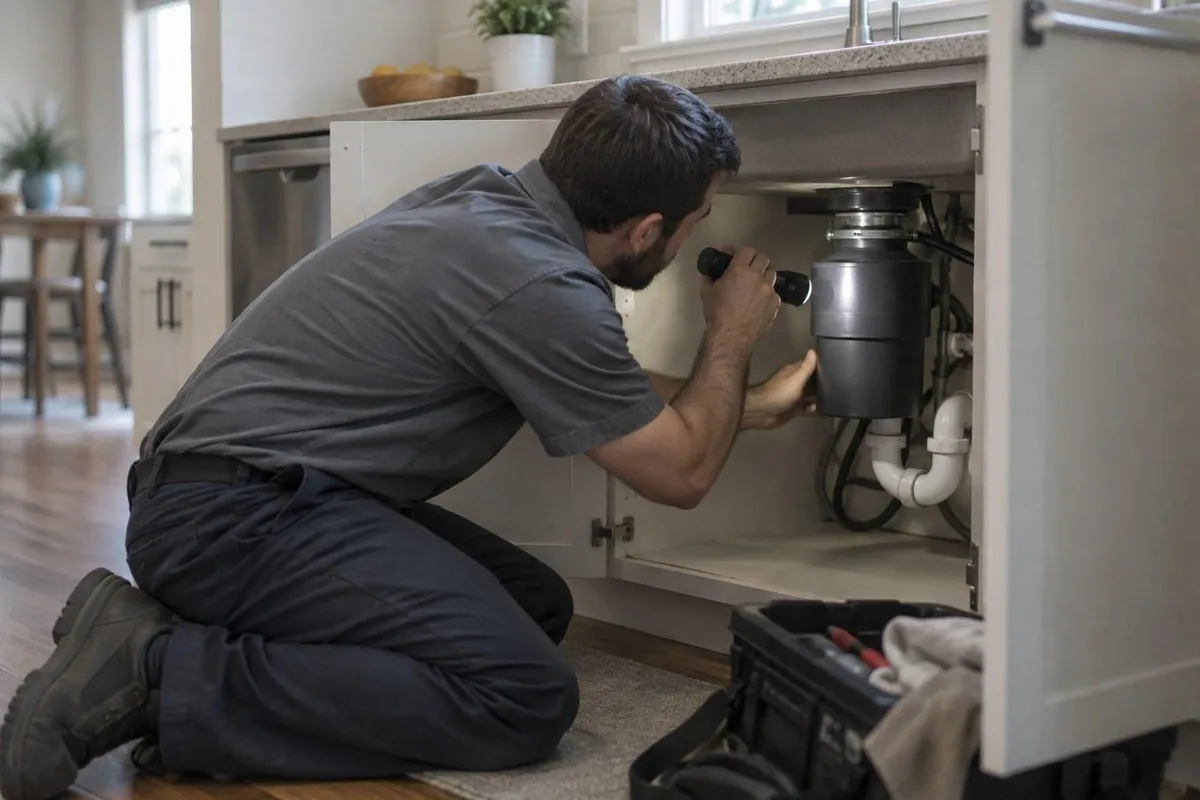
Even careful cooks can end up with a clog after a big holiday meal. Watch for these warning signs, and stop using the disposal if you notice them.
Humming Without Grinding
If the motor hums but the blades do not spin, something is likely jammed in the chamber. Turn the unit off at the switch right away. Never put your hand inside the disposal. Many units have a reset button on the bottom, but if a reset does not help, a plumber can free the jam safely and check for damage. Our garbage disposal services cover repair and replacement when a unit has reached the end of its life.
Slow Drains and Backups in the Other Basin
When water rises in one side of a double sink while the other side drains, the clog is usually in the shared drain line past the disposal. Plunging hard or adding chemicals can push the blockage deeper. Professional drain cleaning clears grease and food buildup from the line instead of just poking a hole through it.
Gurgling and Backups in Other Fixtures
Gurgling sounds, bad smells, or water coming up in a tub or floor drain when you run the kitchen sink can point to a problem farther down the line, in the main drain or the sewer connection. That is a sign to stop running water and get help. Our team handles sewer services for the main line under and beyond your home.
Leaks Under the Sink
A busy day of grinding can loosen connections or expose a worn seal. Water dripping from the bottom of the disposal, the dishwasher hose or the trap means it is time for a repair. Our plumbers also handle fixture repairs and installation if your faucet or sink needs work while we are there.
If your kitchen sink backs up on Thanksgiving Day, our plumbers are available 24/7, including holidays, with emergency plumbing help across Fort Worth.
Ready to Get Started with HAT Plumbing, Heating & Air?
Knowing what not to put down a garbage disposal keeps your holiday focused on family, not a flooded sink. If your disposal is jammed, your kitchen drain is slow, or you want a check before Thanksgiving, call HAT Plumbing, Heating & Air at (817) 405-4575. Our licensed plumbers serve Fort Worth from our office at 7630 Pebble Drive, Fort Worth, TX 76118, and are available 24 hours a day, 7 days a week.