
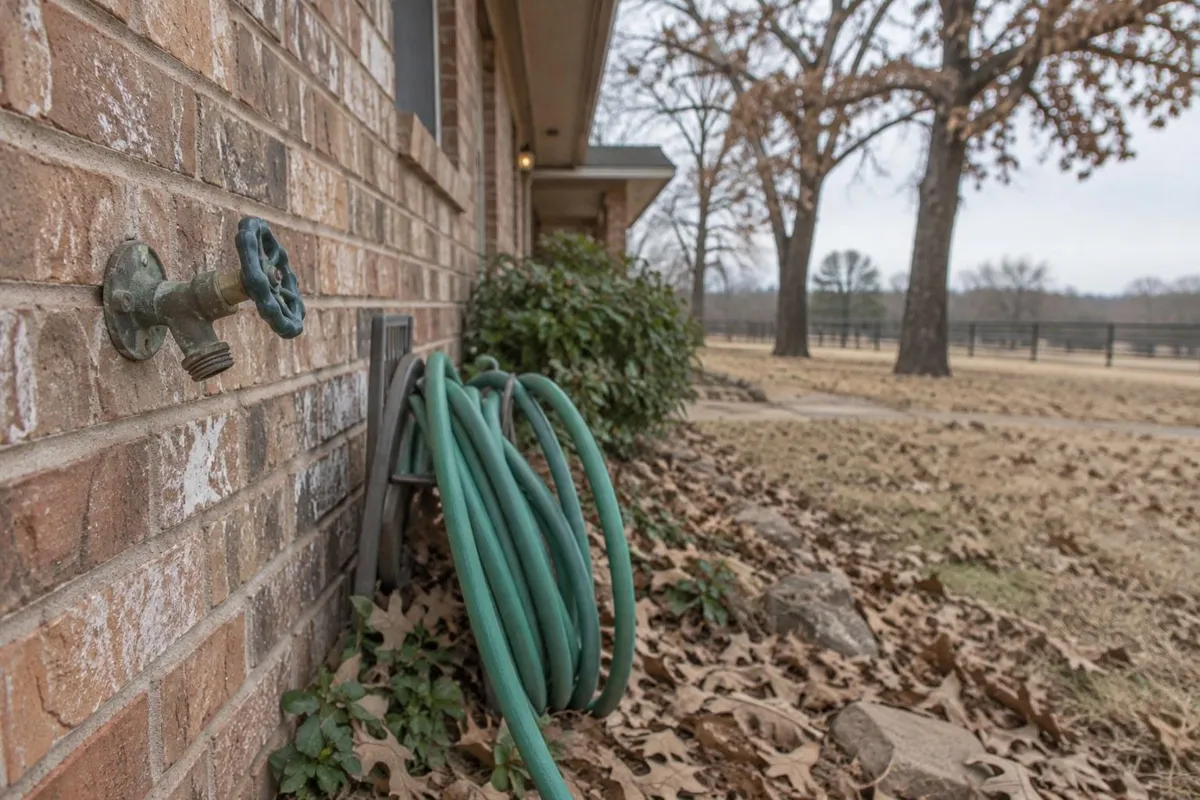
Learning how to winterize outdoor faucets is one of the simplest ways to protect your home from a burst pipe this winter. In North Richland Hills, fall days can still feel warm, but the first hard cold snap often shows up with little warning, and an exposed hose bib is usually the first part of your plumbing to freeze.
At HAT Plumbing, Heating & Air, our licensed plumbers work with North Richland Hills homeowners every season from our office on Davis Blvd. Below you will find why outdoor faucets are so vulnerable here, a step-by-step winterizing routine, how to handle different faucet types, and what to do if a pipe freezes anyway.
Prefer to have a pro check your outdoor plumbing before cold weather arrives? Our team offers upfront, flat-rate pricing and is available around the clock.
Key Takeaways
- The National Weather Service lists November 22 as the average first freeze date for Dallas/Fort Worth, so late November is the time to finish outdoor plumbing prep.
- Disconnecting garden hoses is the most important step, because a connected hose traps water that can freeze back into the faucet and the pipe behind the wall.
- Insulated faucet covers are inexpensive and help a lot, but they work best on a faucet that has already been drained.
- Frost-free faucets still need the hose removed to drain properly, and standard faucets may need an interior shutoff closed.
- If a faucet will not shut off, drips constantly, or shows a crack, have it repaired before the first hard freeze rather than after.
Why Outdoor Faucets Freeze First in North Richland Hills
Most of the plumbing in a North Texas home runs through heated space or under the slab, where the ground keeps it from getting too cold. Outdoor faucets are the exception. The valve sits outside, and the short pipe behind it runs through an exterior wall that can get very cold on a windy night.
Because that short section of pipe holds standing water, it has no way to stay warm once temperatures drop. Water expands as it freezes, and the pressure it creates can split a faucet body or a copper line in a single night, often in a spot you cannot see.
Mild Winters Lead to Missed Prep
North Texas winters are mild most of the time, so many homeowners skip winter prep altogether. The trouble is that a single night well below freezing is all it takes. Homeowners across the area still remember Winter Storm Uri in February 2021, when days of extreme cold caught houses that had never needed protection before.
Homes Built for Heat, Not Cold
Much of North Richland Hills was built between the 1950s and the 1980s, with plenty of brick ranch homes on slab foundations. Outdoor faucets in those homes are often mounted directly on a brick wall with a short run of pipe behind them and little or no insulation. Newer two-story homes on the north side of town can have faucets on long exterior walls or in spots that catch the north wind.
Water Quality Adds Wear
North Richland Hills buys its water from Fort Worth and the Trinity River Authority, and it is moderately hard. Over the years, mineral scale builds up inside outdoor valves and washers. A worn faucet that never quite shuts off leaves water sitting in the spout, which makes it much more likely to freeze.
How to Winterize Outdoor Faucets Step by Step
You do not need special tools to protect most outdoor faucets. Set aside 20 to 30 minutes on a mild afternoon and work through each faucet around the house.
Step 1: Disconnect and Drain Every Hose
Unscrew every garden hose, splitter, timer and quick-connect fitting from your outdoor faucets. Even a short hose left attached holds water against the valve. When that water freezes and expands, it can push back into the faucet and crack the pipe inside the wall.
Stretch each hose out on a slope to drain it, coil it, and store it in the garage or a shed. Hoses last longer when they are kept out of the cold, too.
Step 2: Close the Interior Shutoff if You Have One
Some homes have a separate shutoff valve for each outdoor faucet. In North Texas homes, these are usually found inside the garage, in a utility room, or behind an access panel near the faucet. Turn the handle clockwise until it stops, or turn a lever so it sits across the pipe.
Many slab homes in North Richland Hills do not have a dedicated shutoff. That is normal. If you cannot find one, skip ahead and focus on draining and covering the faucet.
Step 3: Open the Faucet to Drain It
With the interior shutoff closed, go outside and open the outdoor faucet fully. Let any water in the line drain out. If there is a small drain cap on the interior valve, a plumber can show you how to use it to empty the short section of pipe between the valve and the wall.
If your faucet has no separate shutoff, open it briefly to make sure it flows and shuts off cleanly, then close it firmly. A faucet that keeps dripping after you close it needs repair before cold weather.
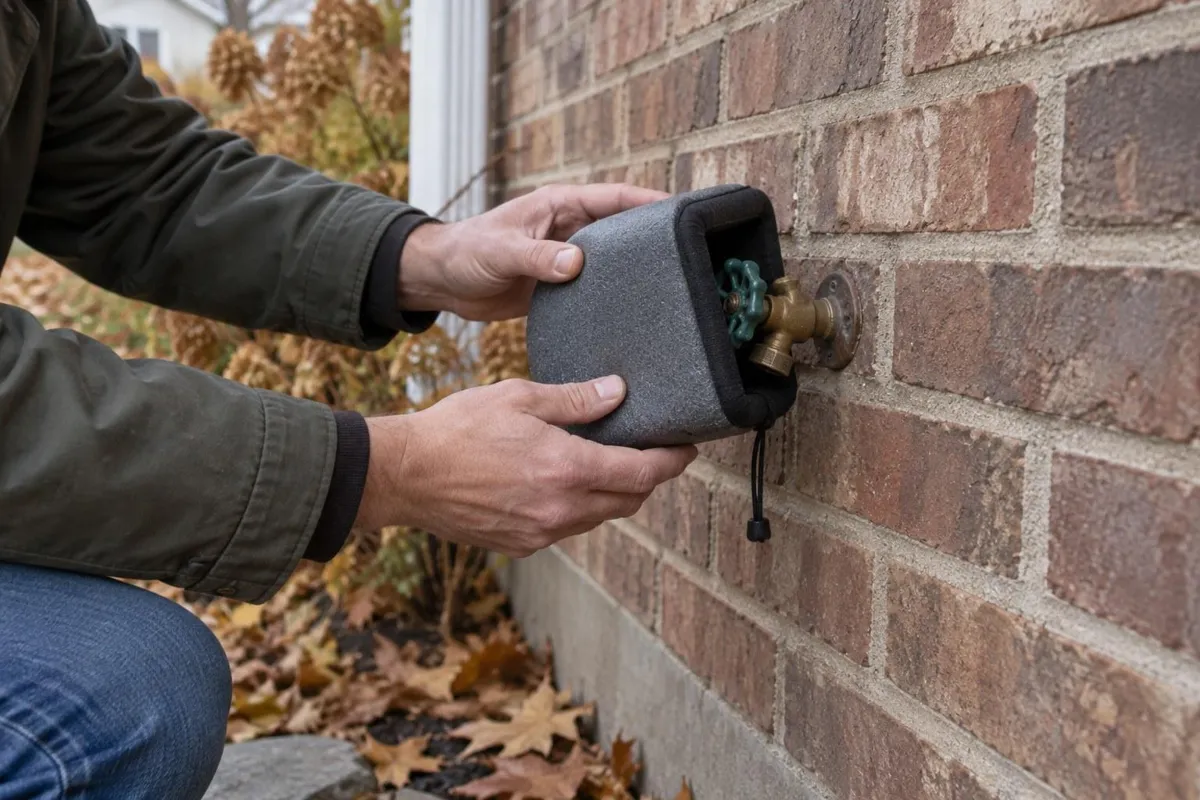
Step 4: Install an Insulated Faucet Cover
Foam or insulated fabric covers slip over the faucet and seal against the wall. They hold in a little warmth from the house and block wind. Make sure the cover sits flush against the brick or siding, with no gaps.
Leave covers on all winter. Taking them on and off with each cold front is easy to forget during a busy week.
Step 5: Insulate Exposed Pipe
Check for any exposed pipe near the faucet, along the foundation, or in the garage. Slide foam pipe insulation over it, and tape the seams. Pay special attention to pipes on north and west walls, which take the brunt of winter wind.
Questions about a faucet that will not shut off or a valve you cannot find? Give our North Richland Hills team a call.
Winterizing Different Types of Outdoor Faucets
Not every hose bib is built the same way. Knowing which type you have tells you which steps matter most.
| Faucet Type | How to Recognize It | Key Winter Steps |
|---|---|---|
| Standard hose bib | Short spout close to the wall, round handle on top | Remove hose, close the interior shutoff if present, drain, add an insulated cover |
| Frost-free sillcock | Longer body that extends into the wall; the valve seat sits inside the heated space | Remove hose so it can drain, check for drips, add a cover for extra protection |
| Faucet with vacuum breaker | Small cap or knob on top of the spout | Remove hose, make sure the breaker is not leaking, add a cover |
| Faucet on an exposed pipe | Pipe runs above ground before reaching the faucet | Insulate the entire exposed run, drain and cover the faucet |
Frost-Free Faucets Still Need Attention
A frost-free faucet places the actual shutoff valve several inches inside the wall, where it stays warmer. When you close it, the water in the spout drains out. That only works if nothing is attached. A hose left connected keeps water in the long stem, and the faucet can split inside the wall where you cannot see it until spring.
Irrigation and Backflow Devices
Sprinkler systems in North Richland Hills usually have a backflow preventer near the house or the meter. Those devices have exposed parts that can crack in a freeze. Many homeowners wrap them with insulation or a cover designed for backflow devices. If you are not sure how your irrigation system should be shut down, ask your irrigation contractor before cold weather sets in.
A Fall Plumbing Checklist for the Rest of Your Home
While you are outside winterizing faucets, it is a good time to look over the rest of your plumbing. A few quick checks in November can prevent headaches when the holidays and cold weather arrive at the same time.
Know Where Your Main Shutoff Is
Every adult in the house should know how to close the main water shutoff. Find it now, make sure it turns, and clear away any plants, mulch or dirt around the meter box. If the valve is stuck or hard to reach, have a plumber look at it. In a burst pipe emergency, every minute the water keeps running adds to the damage.
Look at Your Water Heater
Your water heater works harder in winter because the water coming into the house is colder. Check the area around the tank for moisture, rust or corrosion on the fittings. If your heater is in the garage, keep the garage door closed on cold nights. If you notice leaks, odd noises or a shortage of hot water, our water heater services can help before the cold makes things worse.
Walk the Foundation
Take a slow walk around the outside of your home. Look for exposed pipes near the slab, cracked caulk where pipes enter the wall, and gaps that let cold air reach plumbing. Seal small gaps with caulk or expanding foam, and note anything that looks damaged so a plumber can check it.
Check Under Sinks on Outside Walls
Open the cabinets under sinks that sit on exterior walls. Look for drips, water stains or soft spots in the cabinet floor. Clearing out some of the stored items also makes it easier to open the doors and let warm air in on freezing nights.
What to Do on Nights With a Hard Freeze
Winterized faucets handle most cold nights on their own. When forecasters call for temperatures well below freezing, take a few extra steps around the house.
Protect Pipes on Exterior Walls
Open the cabinet doors under kitchen and bathroom sinks on outside walls so warm air can reach the pipes. Keep the garage door closed if water lines or your water heater are in the garage. Keep your thermostat at a steady setting day and night rather than turning it way down.
Consider a Slow Drip
During a severe freeze, letting an indoor faucet on an exterior wall drip slowly can keep water moving through the pipes. Use cold water so you do not run your water heater all night. Turn the faucets back off once temperatures rise.
If You Will Be Away
Leaving town for the holidays? Keep the heat on at a moderate temperature, and know where your main water shutoff is located. In many North Richland Hills homes, it sits in the meter box near the street or where the line enters the slab. Closing the main before a long trip during freezing weather limits damage if a pipe does break.
Signs an Outdoor Faucet or Pipe Has Frozen
Even with good prep, an unexpected cold snap can freeze a line. Catching it early makes a big difference.
No Water or a Trickle
If an outdoor faucet or a nearby indoor fixture gives you little or no water on a freezing morning, the line may be frozen. Frost on the pipe or a bulge in the faucet body are other clues.
Safely Thawing a Frozen Line
Leave the faucet open so water can flow once it thaws. Warm the area gently with a hair dryer or a space heater kept a safe distance away. Never use an open flame or torch, which can start a fire inside the wall or damage the pipe.
When a Pipe Has Burst
If you see water spraying, pooling along the foundation, or wet spots on an inside wall, close the main water shutoff right away. Burst pipes behind walls can cause serious damage in a short time. Our emergency plumbing team is available 24 hours a day, 7 days a week. We can also help with leak detection and repair to find hidden damage after a freeze.
When to Call a Plumber Before Winter
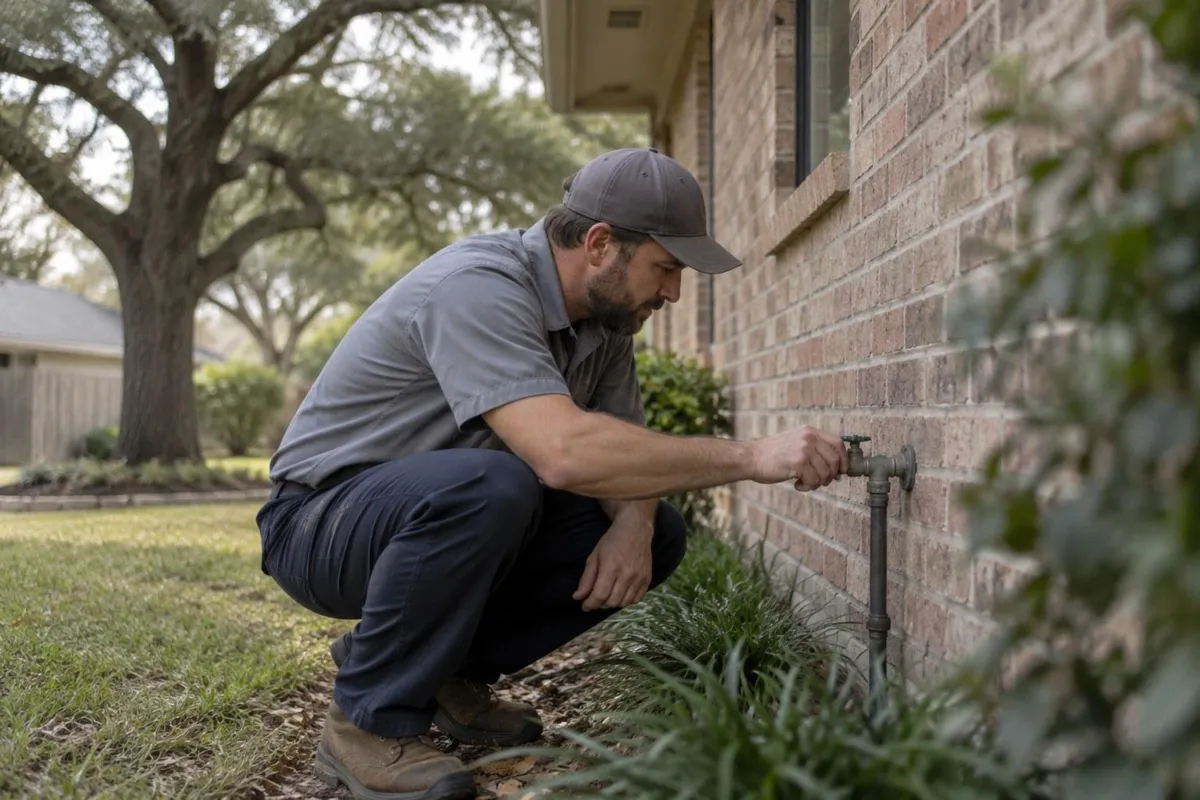
Some outdoor plumbing problems are best handled before the cold arrives. If your faucet drips after you close it, the handle spins without shutting off, or you find rust or cracks on the spout, it is time for a plumbing repair.
Upgrading to Frost-Free Faucets
If your home still has standard hose bibs on exposed walls, a plumber can replace them with frost-free models that are better suited to a sudden North Texas freeze. Our fixture repairs and installation service covers outdoor faucets as well as indoor fixtures.
Older Pipes and Water Lines
Homes from the 1950s through the 1980s may still have aging supply lines, and North Richland Hills clay soil shifts with wet and dry seasons. If your water line or outdoor pipes are showing their age, our water line service can evaluate them. You can also learn more about local service on our North Richland Hills plumber page.
Want your outdoor faucets and exposed pipes checked before the first freeze? Our licensed plumbers are ready to help.
Ready to Get Started with HAT Plumbing, Heating & Air?
Knowing how to winterize outdoor faucets helps you get through North Texas winters without a burst pipe. If you want your faucets, exposed pipes or water line checked before the first freeze, call HAT Plumbing, Heating & Air at (817) 405-4575. Our licensed plumbers serve North Richland Hills from our office at 8376 Davis Blvd Suite 254, North Richland Hills, TX 76182, and are available 24 hours a day, 7 days a week.