
If your toilet keeps running long after you flush, you are not imagining that faint hiss in the middle of the night. A running toilet is one of the easiest plumbing problems to ignore, and one of the quietest ways to waste water every single day.
At HAT Plumbing, Heating & Air, our licensed plumbers help homeowners throughout Fort Worth track down running toilets all year long, from older homes near Arlington Heights and Riverside to newer builds across the city. Below, you will learn which parts inside the tank cause the problem, how to run a few safe checks on your own, how local water conditions wear down toilet parts, and how to decide between a simple repair and a new toilet.
Tired of hearing your toilet refill on its own? Our team can find the cause and give you upfront, flat-rate options.
Key Takeaways
- A running toilet is almost always caused by a part inside the tank, such as the flapper, fill valve, float, chain or overflow tube.
- You can safely close the supply stop behind the toilet and lift the tank lid to look for obvious problems.
- A few drops of food coloring in the tank can reveal a silent leak into the bowl without any tools.
- Hard water in the Fort Worth area can wear down rubber seals and valve parts over time.
- Older toilets with cracked porcelain, repeated failures or worn bolts and tank parts are often better replaced than repaired.
- If the water keeps running after simple checks, a licensed plumber can diagnose the cause and fix it correctly.
How a Toilet Tank Works
Before you can figure out why water keeps moving, it helps to know what is supposed to happen when you flush. The tank on the back of your toilet is a simple machine, but every part has to do its job for the water to stop at the right moment.
The Flush Cycle in Plain Terms
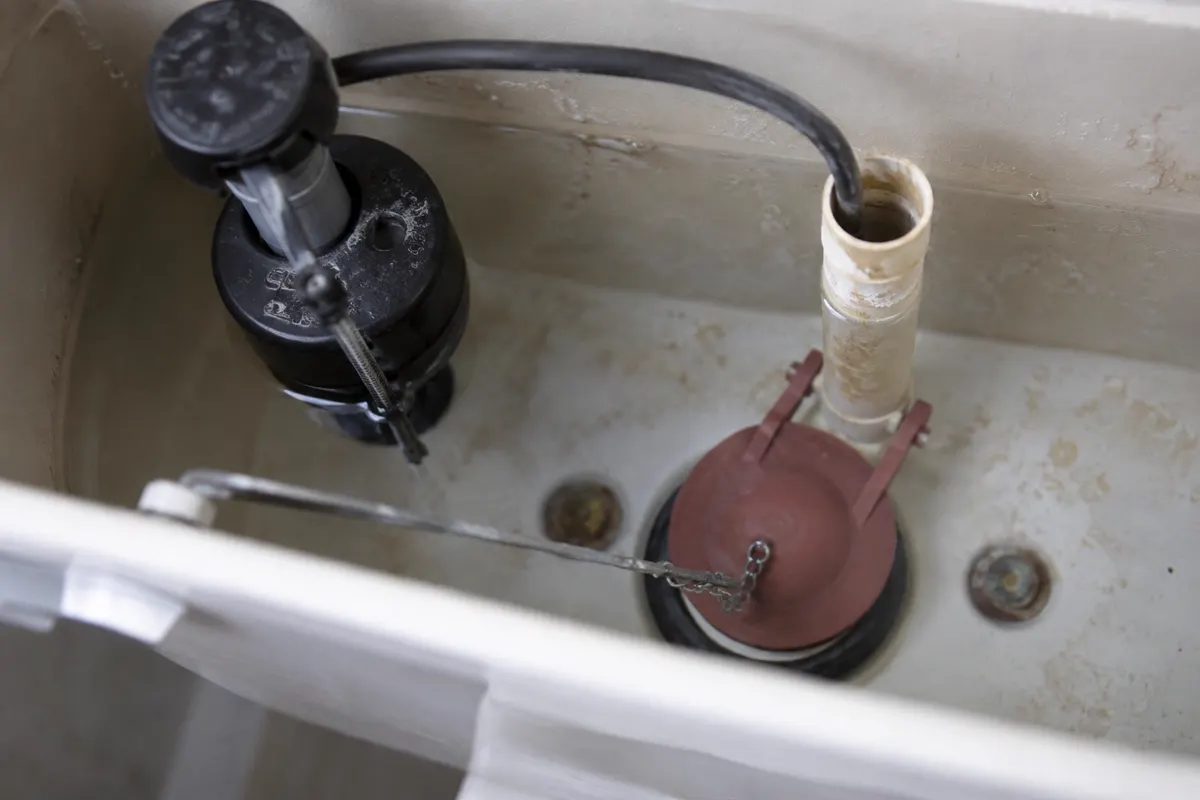
When you press the handle, a lever lifts a chain, and the chain pulls up a rubber flapper at the bottom of the tank. Water rushes from the tank into the bowl, which pushes waste down the drain.
As the tank empties, the flapper drops back onto its seat and seals the opening. At the same time, the float drops, which tells the fill valve to open and start refilling the tank.
When the water reaches the correct level, the float rises and the fill valve shuts off. A small refill tube also sends a little water into the overflow tube so the bowl refills to its normal level.
Where Things Go Wrong
If any one of those steps fails, water keeps flowing. The flapper may not seal, the fill valve may not shut off, or the water level may be set so high that it spills into the overflow tube.
Common Reasons Your Toilet Keeps Running
Most running toilets come down to a handful of parts. The table below gives you a quick look at each one, what you might notice, and what usually fixes it.
| Part | What You Might Notice | Typical Fix |
|---|---|---|
| Flapper | Tank refills on its own every so often, or water trickles into the bowl | Clean the seat or replace the flapper |
| Fill valve | Constant hissing, water never fully shuts off | Adjust, clean or replace the fill valve |
| Float | Water level sits too high or too low | Adjust the float height or replace the float |
| Chain | Flapper will not close, or flush is weak | Adjust chain length or replace it |
| Overflow tube | Water spills into the tube nonstop | Lower the water level or replace a cracked tube |
| Handle | Handle sticks down or feels loose | Tighten, adjust or replace the handle |
A Worn or Warped Flapper
The flapper is the most frequent troublemaker. It is a rubber part that sits underwater all the time, so it eventually stiffens, warps or picks up mineral buildup.
When the flapper no longer seals tightly, water slowly leaks from the tank into the bowl. Once the tank level drops far enough, the fill valve kicks on to top it off. That is the classic "phantom flush" you hear when nobody has used the bathroom.
A Faulty Fill Valve
The fill valve controls how water enters the tank. If debris gets caught in the valve or its internal seal wears out, it may never fully close.
You will often hear a steady hiss or see water continuously draining into the overflow tube. Some fill valves can be cleaned, but a worn valve usually needs replacement.
A Float Set Too High
Older toilets use a ball float on an arm, while newer models use a cup float that slides up and down the fill valve. Either way, the float decides when the water shuts off.
If the float is set too high, the water rises above the top of the overflow tube and drains away nonstop. If a ball float is waterlogged or rubbing against the tank wall, it may not rise enough to stop the flow.
A Chain That Is Too Short or Too Long
The chain connects the handle lever to the flapper. A chain that is too short holds the flapper slightly open. A chain that is too long can get tangled or trapped under the flapper so it cannot seal.
The right length usually has just a little slack when the flapper is closed.
A Cracked Overflow Tube
The overflow tube is the vertical pipe in the middle of the tank. Its job is to prevent the tank from spilling over if the fill valve fails.
If the tube cracks below the water line, water drains into the bowl constantly. Replacing an overflow tube often means removing the tank, which is a bigger job than swapping a flapper.
A Sticking Handle
Sometimes the problem starts on the outside. A handle that is loose, corroded or bent can stay partly down after you flush, which keeps the flapper lifted.
If you have looked inside the tank and still cannot pin down the cause, our licensed plumbers are available 24 hours a day, 7 days a week.
Simple, Safe Checks You Can Do at Home
You do not need special tools to learn a lot about a running toilet. These checks are safe for most homeowners and can help you describe the problem clearly if you decide to call a plumber.
Close the Supply Stop
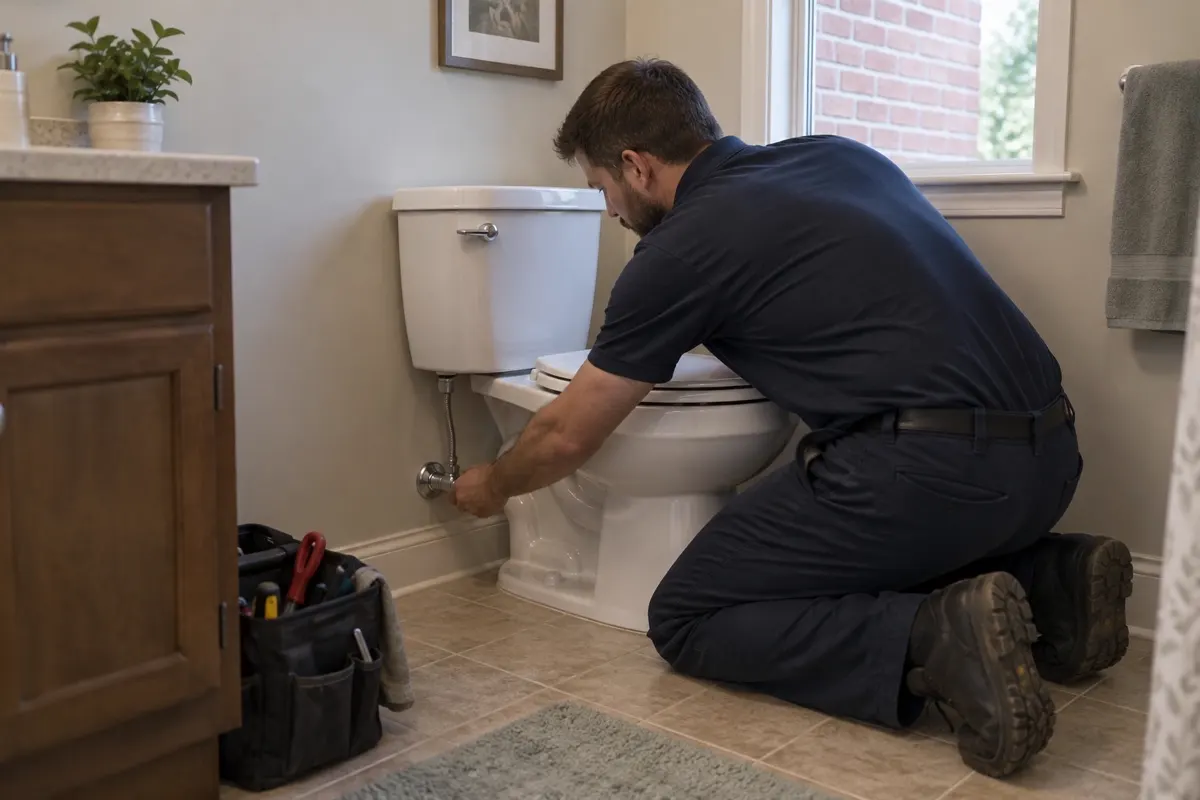
Look behind and below the toilet for a small valve on the wall or floor. This is the supply stop, and it controls water to the toilet only.
Turn it clockwise until it stops. If the running sound ends, you have confirmed the water was coming through the supply line, and you have stopped the waste while you figure out the next step.
Do not force a valve that will not turn. Older supply stops can seize or start leaking at the stem if they are cranked too hard. If yours is stuck, leave it alone and let a plumber handle it.
Take the Lid Off and Look
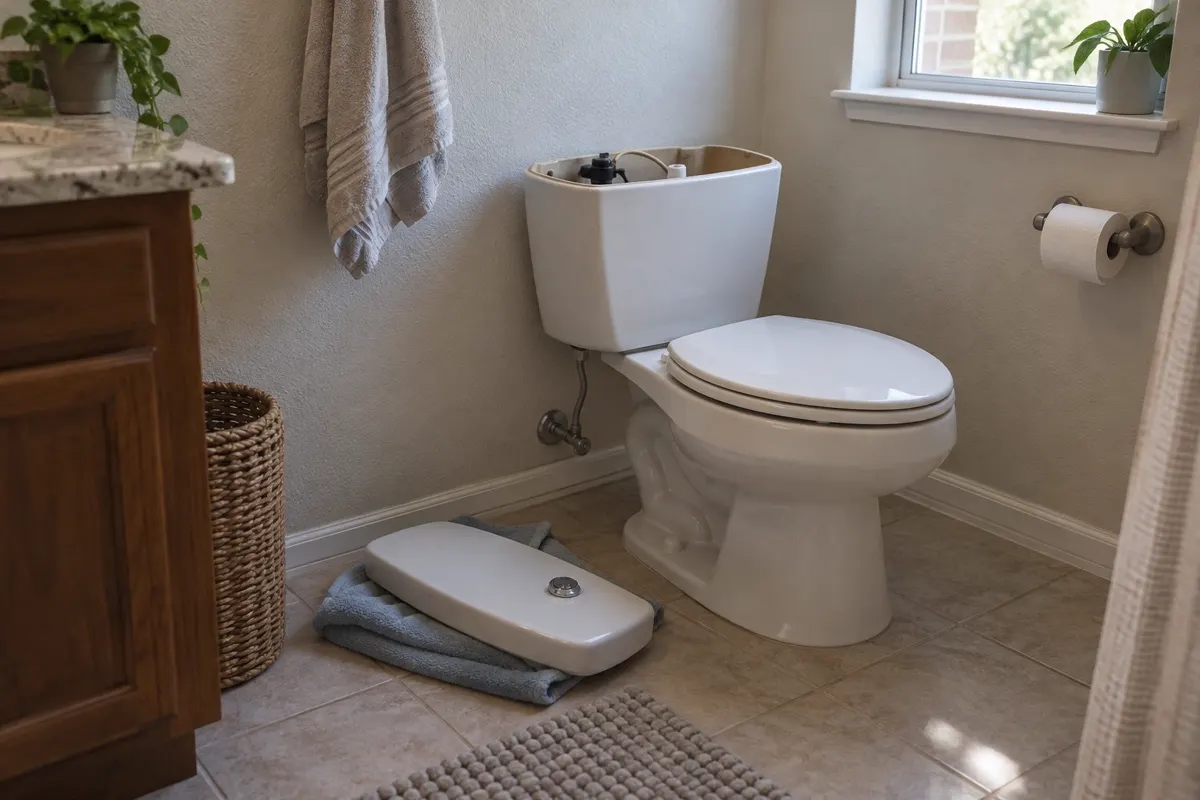
Carefully lift the tank lid and set it on a towel on the floor, since the porcelain is heavy and breaks easily. Then watch the parts as you flush.
- Is the chain tangled, caught or pulled tight?
- Does the flapper drop fully and sit flat on its seat?
- Is the water level above the top of the overflow tube?
- Do you see any cracks in the overflow tube or the tank itself?
- Does the handle return to its resting position on its own?
Try the Food Coloring Dye Test
Silent leaks can hide in plain sight. To check for one, add several drops of food coloring to the tank water, put the lid back on and do not flush.
Wait about 15 to 30 minutes, then look in the bowl. If colored water shows up in the bowl, the flapper or its seat is leaking. Flush afterward so the dye does not stain the porcelain.
The EPA WaterSense program recommends this same kind of dye test as an easy way to catch toilet leaks at home.
Why a Running Toilet Is Worth Fixing Now
It is easy to tell yourself that a little running water is no big deal. But a toilet that runs day and night adds up faster than most people expect.
Wasted Water and Higher Bills
A steady leak from the tank to the bowl sends clean water straight down the drain all day long. Over a billing cycle, that can noticeably raise your water and sewer charges.
During a hot stretch in Fort Worth, when you are already watering the lawn and running the AC, an unexpected bump on the water bill is the last thing you want.
Hidden Damage and Wear
A running toilet also keeps the fill valve working nonstop, which wears it out sooner. If the problem involves a leak at the tank bolts or supply line, water can seep under the toilet and into the subfloor or around the base on your slab.
If you notice soft flooring, stains or a musty smell near the toilet, our leak detection and repair service can help you find where the water is really going.
How Fort Worth Water Affects Toilet Parts
Local water conditions play a real role in how long the parts inside your tank last. A few things stand out for homes across Fort Worth.
Treated Water and Rubber Parts
Fort Worth Water Utility treats drinking water before it reaches your home, and that treated water travels through long distribution lines before it ever gets to your tank. Over time, the chemicals used to keep water safe can be tough on certain rubber parts.
Flappers and seals may soften, swell, crack or lose their shape as they age. A flapper that once sealed perfectly can start letting water slip past. If you find yourself replacing flappers often, ask your plumber about parts designed to hold up better over the long run.
Hard Water and Mineral Buildup
Water in the Fort Worth area also tends to be moderately hard. North Texas water like this carries dissolved minerals like calcium and magnesium. Those minerals leave scale on the flapper seat, inside the fill valve and around the small openings that control water flow.
Scale on the flapper seat creates tiny gaps that let water leak through. Scale inside the fill valve can keep it from closing all the way. Both lead to the same frustrating result.
Older Homes Around Fort Worth
Age matters as much as water. Many Fort Worth neighborhoods such as Arlington Heights, Ridglea and Riverside have older homes with original supply stops and aging connections behind the toilet. In homes like these, supply lines and shutoff valves can be decades old and more prone to sticking or leaking once you start working on them.
Protecting Your Fixtures Over Time
If hard water is wearing down your toilets, faucets and water heater, it may be worth looking at whole-home treatment. Our water filtration options can help reduce mineral buildup and protect the fixtures throughout your home.
Routine checkups help too. With a Stetson Select membership, you get regular attention from our team so small issues like a worn flapper or a tired fill valve are spotted early.
Repair or Replace: Making the Right Call
Most running toilets can be repaired by replacing one or two inexpensive internal parts. But there are times when a new toilet makes more sense.
When Repair Makes Sense
Repair is usually the right choice when the toilet is in good shape overall and the problem is limited to the flapper, chain, float, handle or fill valve. These parts are designed to be replaced, and a well-built toilet can keep working for many years with fresh internals.
Our toilet repair service covers these common fixes, and our plumbers explain your options before any work begins.
When Replacement Is the Better Choice
Replacement is often the smarter move in situations like these:
- The tank or bowl has a crack, even a small one.
- You are fixing the same toilet again and again.
- Replacement parts are hard to find for an older or unusual model.
- The toilet rocks, leaks at the base or has corroded bolts and connections.
- You want a newer, more water-efficient model that flushes better.
If you are ready for a new toilet, our fixture repairs and installation team can help you choose a model and install it correctly so it seals well from day one.
When to Call a Plumber
Simple checks can tell you a lot, but some signs mean it is time to bring in a professional.
Signs You Need Professional Help
- The toilet keeps running after you adjust the chain and float.
- The dye test shows a leak and a new flapper did not solve it.
- The supply stop is stuck, leaking or will not shut off the water.
- You see water on the floor, around the base or under the tank.
- The overflow tube is cracked or the tank needs to come off the bowl.
- Several fixtures in your home are acting up at the same time.
What a Licensed Plumber Brings
Our plumbers are licensed by the Texas State Board of Plumbing Examiners (license M-37665). We check every part of the flush cycle, the supply connection and the seal at the base, then recommend the fix that fits your toilet and your budget.
If the running toilet is part of a bigger pattern, like low water pressure, noisy pipes or leaks elsewhere, our plumbing repairs team can look at the whole system. Financing options are also available for larger projects.
Ready to stop the constant refilling for good? Book a visit and our team will take care of it with upfront, flat-rate pricing.
Ready to Get Started with HAT Plumbing, Heating & Air?
If your toilet keeps running, there is no need to put up with the noise or the wasted water. HAT Plumbing, Heating & Air is Honest. Attentive. Thorough. Call (817) 405-4575 any time, 24 hours a day, 7 days a week, for help in Fort Worth, Hurst, Bedford, Euless, Keller and nearby communities. Visit our office at 7630 Pebble Drive, Fort Worth, TX 76118, (817) 405-4575.