
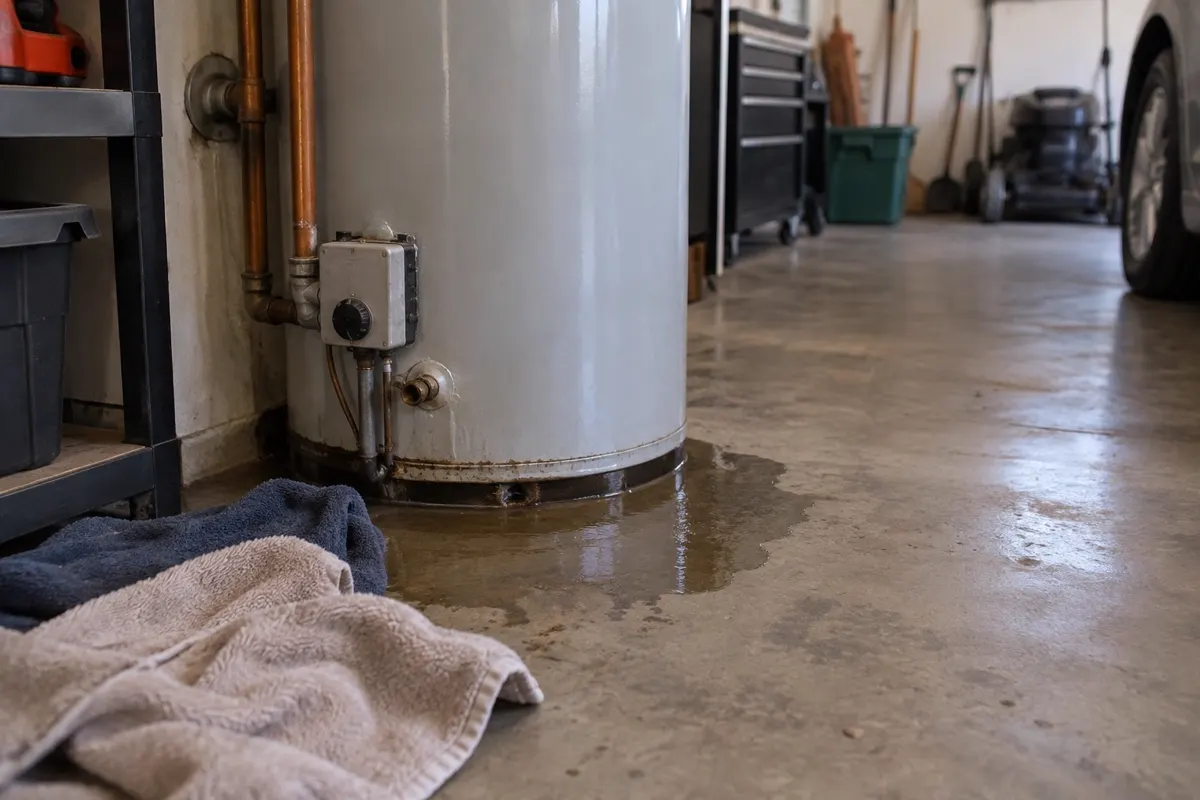
Finding your water heater leaking is one of those moments that makes your stomach drop, whether you live in an older brick ranch near Richland Hills or a newer home off Davis Boulevard. A small puddle in the garage or a damp closet floor can mean anything from a loose fitting to a tank that has reached the end of its life. The good news is that the location of the water usually tells you a lot about the cause.
At HAT Plumbing, Heating & Air, our licensed plumbers help homeowners throughout North Richland Hills sort out leaks like this from our office on Davis Blvd. Below, you will learn how to pinpoint where the water is coming from, what each source means, when a repair makes sense, and the safe steps to take right now.
Seeing water around your tank and not sure what it means? Our team can inspect it and give you upfront, flat-rate options.
Key Takeaways
- The spot where water collects around your heater is the best clue to the cause, so check the top, the valves, and the base before you assume the worst.
- Leaks at the top fittings, the drain valve, or the temperature and pressure relief valve are often repairable without replacing the whole unit.
- Water seeping from the bottom of the tank itself usually means internal corrosion, and a corroded tank cannot be patched safely.
- Your first moves are to shut off the cold water supply and then turn off the power or set a gas unit to its pilot or vacation setting.
- North Richland Hills water is moderately hard, so sediment builds inside tanks, speeds up corrosion, and puts extra stress on valves and fittings.
First Steps When You Find a Leak
Before you play detective, protect your home and yourself. A few calm minutes now can prevent soaked drywall, warped baseboards, and a ruined garage floor.
Shut Off the Cold Water Supply
Look for the cold water line running into the top of the heater. It should have a shutoff valve, usually a lever handle or a round wheel. Turn a lever a quarter turn so it sits across the pipe, or turn a wheel clockwise until it stops.
This keeps the tank from refilling as it leaks. It will not drain the water already inside, but it stops the problem from growing. If you cannot find that valve or it will not budge, you can close the main water shutoff for the house, which in many North Richland Hills homes sits near the street in a meter box or where the line enters the slab.
Cut the Power or Set the Gas to Pilot
For an electric water heater, switch off its dedicated breaker in your electrical panel. Heating elements that run in a tank losing water can burn out quickly.
For a gas water heater, turn the control knob on the gas valve to the "pilot" or "vacation" setting. That stops the main burner from firing while you wait for help. You do not need to touch the gas line itself.
If you ever smell gas near the heater, do not flip switches or try to find the source. Leave the house right away and call Atmos Energy or 911 from outside. Our post on gas line safety tips explains more about what to watch for.
Protect the Area and Stay Safe
Move boxes, rugs, and anything stored near the tank. Lay down towels or use a wet vacuum to pick up standing water. Keep in mind that water near the heater may be very hot, so avoid putting your hands directly in the flow.
Take a few photos of where the water is pooling and any drips you can see. Those pictures help your plumber understand what happened, even if the leak slows down after you shut off the supply.
Where Is Your Water Heater Leaking From?
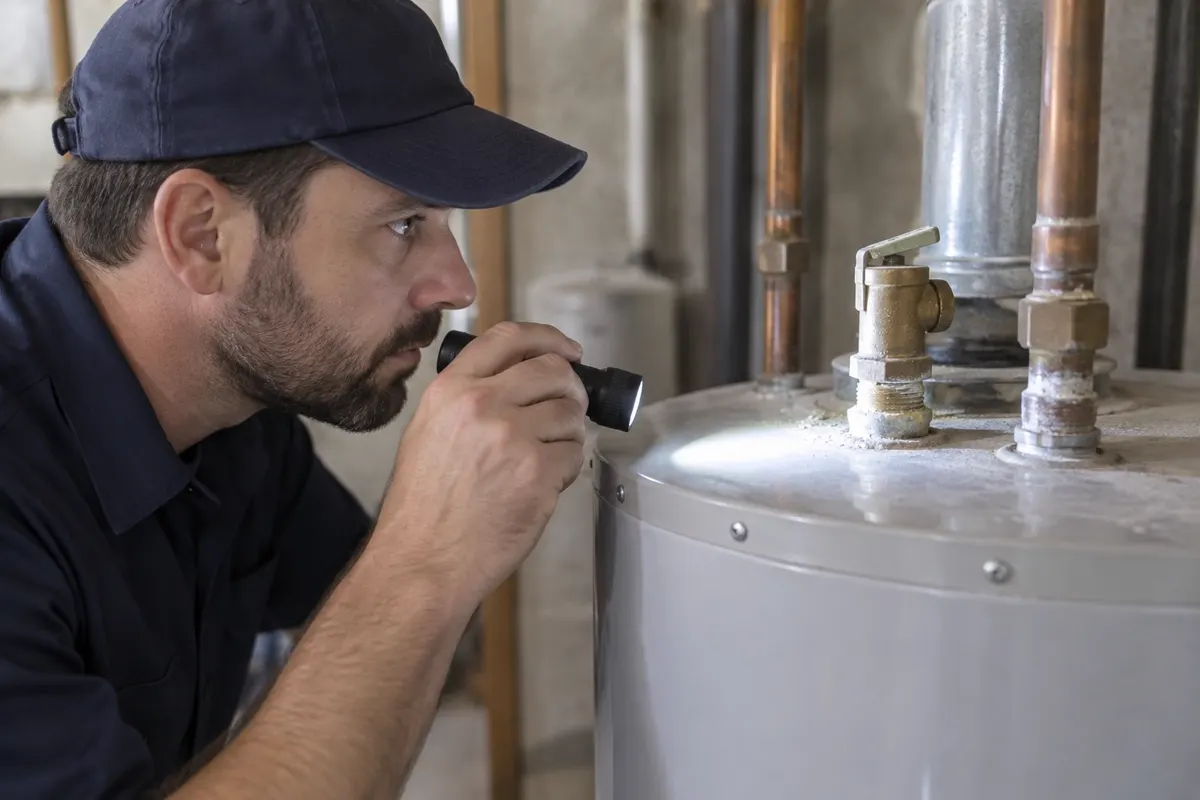
Once things are safe, take a careful look. Dry the tank and the floor with a towel, then watch for a few minutes to see where fresh water appears. Use a flashlight and check from top to bottom, because water can run down the outside of the jacket and fool you into thinking the bottom is the problem.
Leaks at the Top Fittings
The top of a tank water heater has the cold inlet, the hot outlet, and often a flexible connector on each. Over time, the threaded fittings can loosen, the connectors can wear out, and dielectric unions between different metals can corrode.
Signs to look for include drips forming on the pipes above the tank, white or green crust around the connections, and rust stains running down the side. A leak here is usually a fitting or connector issue rather than a failed tank, which is good news.
Leaks from the Temperature and Pressure Relief Valve
The temperature and pressure relief valve, or T&P valve, is a safety device on the top or upper side of the tank. A pipe runs from it down toward the floor or to the outside. Its job is to release water if the temperature or pressure inside gets too high.
If water is coming from that discharge pipe, the valve may be worn out, or it may be doing its job because something else is wrong. High household water pressure, a thermostat set too hot, or a missing expansion tank can all cause it to open. Never cap or plug this pipe. The valve protects you from a dangerous buildup of pressure.
Leaks from the Drain Valve
Near the bottom of the tank you will find the drain valve, which is used to flush sediment. Many factory valves are plastic. They can drip from the spout if they are not fully closed, or leak around the stem as the seal ages.
Sediment can also keep the valve from seating fully after a flush. A dripping drain valve is a common and generally fixable problem, though it should be handled with care because the tank is full of hot water.
Leaks from the Bottom of the Tank
If the top, the T&P valve, and the drain valve are all dry, yet water keeps showing up under the heater, the tank itself is likely leaking. The steel inner tank is lined with glass and protected by an anode rod. Once that protection is used up, rust eats through the steel.
You may also notice condensation on gas units, especially when cold water first fills the tank. Condensation tends to be light and stops once the water warms up. A steady leak that keeps coming back points to a tank failure.
Not sure which of these you are looking at? A licensed plumber can tell you in one visit.
What Each Leak Usually Means: Repair or Replace?
The source of the leak is the biggest factor in whether you can repair your heater or need a new one. Age, overall condition, and how often you have had problems matter too.
| Leak Location | Likely Cause | Typical Outcome |
|---|---|---|
| Top fittings and connectors | Loose threads, worn flex lines, corroded unions | Usually repairable |
| T&P valve or discharge pipe | Worn valve, high pressure, overheating, no expansion tank | Usually repairable, may need pressure correction |
| Drain valve | Worn seal, debris in valve, not fully closed | Usually repairable |
| Bottom or side of tank | Internal rust and corrosion | Replacement needed |
| Under the unit, source unclear | Condensation, nearby pipe, or slab leak | Needs inspection |
When a Repair Makes Sense
If your tank is solid and the leak comes from a fitting, connector, drain valve, or T&P valve, a repair is often the smart choice. Replacing a valve or a set of connectors can return the heater to reliable service, especially if it is still fairly young and heats water well.
A plumber should also look for the reason behind the failure. A relief valve that keeps opening may point to high water pressure in your home. Fixing the root cause protects your new parts and the rest of your plumbing.
When Replacement Is the Better Call
A tank that leaks from its body cannot be safely welded or patched. Once the steel corrodes through, the leak will only grow. In that case, replacement is the only real fix.
Replacement is also worth considering if your heater is older, has needed several repairs, makes loud popping or rumbling sounds, or delivers rusty water. Our water heater services cover repair and replacement, so you get honest guidance either way.
Considering a Tankless Upgrade
If your tank has failed, you may want to look at tankless instead of a straight swap. Tankless units heat water on demand, take up less space, and have no large tank to rust out and flood a garage. They do need proper sizing, gas line or electrical capacity, and regular descaling in hard water areas.
Learn more about tankless water heater installation and whether it fits your household's hot water use.
Why North Richland Hills Water Makes Leaks More Likely
North Richland Hills buys treated water wholesale from the City of Fort Worth and the Trinity River Authority, drawing partly from Lake Arlington. Either way, the water that reaches your home is hard, meaning it carries dissolved minerals like calcium and magnesium. You can see the evidence on your shower glass and faucets.
NRH's 2025 Drinking Water Quality Report lists hardness at about 108 to 150 ppm, or roughly 6 to 9 grains per gallon. The city also disinfects with chloramine, which can be tough on rubber seals and washers over time. The same minerals build up inside your water heater, where you cannot see them.
How Sediment Damages Your Tank
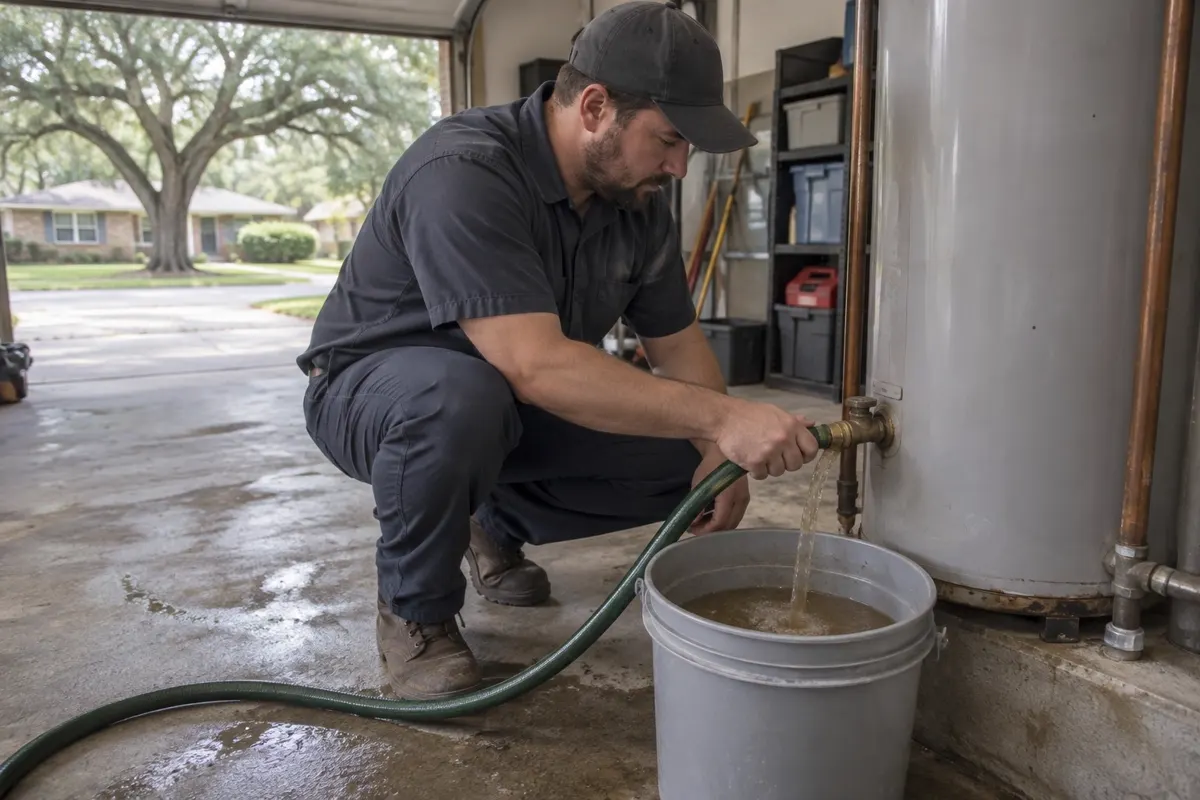
When water heats, minerals fall out of solution and settle on the bottom of the tank as sediment. On a gas unit, that layer sits between the burner and the water, so the steel at the bottom runs hotter than it should. On an electric unit, scale can coat the lower element and cause it to fail early.
Over time, overheating and trapped moisture under the sediment speed up corrosion. Sediment can also clog the drain valve and keep it from sealing, which is one reason drain valves drip in older tanks.
Long Summers, Hot Garages, and Pressure Swings
North Texas weather adds its own stress. Even in early October, North Richland Hills afternoons can stay hot, and many heaters sit in garages or attics that have baked since May. Months of heat and daily expansion and contraction loosen fittings and wear on valves, which is why fall is a smart time to have a tank checked.
Expansive clay soil under slabs, including the Sanger and Slidell clays found across much of North Richland Hills, can also put strain on water lines feeding the heater. If water appears near the heater but none of the heater parts are wet, the problem could be a supply line or even a slab leak. That is where professional leak detection and repair comes in.
Ways to Reduce Hard Water Damage
Annual flushing by a professional removes much of the sediment before it causes trouble. Checking the anode rod helps you replace it before the tank starts to rust. Many homeowners also consider water filtration and softening to reduce mineral buildup throughout the home.
When a Leaking Water Heater Is an Emergency
Not every drip needs a middle of the night call, but some leaks cannot wait. Knowing the difference saves you money and stress.
Call Right Away If You Notice
- Water spraying or flowing steadily from the tank or connections.
- A leak you cannot stop by closing the cold water valve.
- Water reaching drywall, flooring, electrical outlets, or the electrical panel.
- A heater installed in an attic or interior closet, where a leak can damage ceilings and rooms below.
- The smell of gas or signs of scorching around a gas burner.
Remember that a gas smell means leaving the home first and calling from outside. For water emergencies, our emergency plumbing service is available 24 hours a day, 7 days a week.
Local Rules on Replacement in NRH
If your heater does need replacing in North Richland Hills, the city has rules on drain pans, the outside drain line, and an inspection right after installation. Our North Richland Hills plumber team handles those details and works directly with the city to keep your project on track.
Leaks That Can Wait for a Scheduled Visit
A slow drip from the drain valve or a little moisture at a top fitting that stops once you close the supply valve is less urgent. Keep towels or a pan in place, check it a few times a day, and book a visit soon. Small leaks tend to get worse, so do not leave it for weeks.
What to Expect When a Plumber Arrives
Knowing the process can make the visit easier. A good plumber should explain what they find and give you clear choices.
Inspection and Diagnosis
Your plumber will dry the area, trace the water to its source, and test the parts involved. That often includes checking water pressure, the T&P valve, the thermostat setting, the anode rod, and the condition of the tank, venting, and connectors.
They will also confirm that your installation meets current code requirements, such as a proper discharge line, a drain pan where required, and an expansion tank where needed.
Clear Options and Upfront Pricing
At HAT Plumbing, Heating & Air, you get upfront, flat-rate pricing before work begins, so there are no surprises. If repair makes sense, we will tell you. If replacement is the better value, we will explain why and walk you through tank and tankless options. Financing options are available for larger projects.
Preventing the Next Leak
Routine care is the best defense against another surprise puddle. Our Stetson Select membership helps you stay on top of plumbing and comfort maintenance throughout the year, including attention to your water heater.
Ready to stop the leak and protect your home? Book a water heater inspection with our team.
Ready to Get Started with HAT Plumbing, Heating & Air?
If you have a water heater leaking in your North Richland Hills home, do not wait for a small drip to turn into a flooded garage. Call HAT Plumbing, Heating & Air at (817) 405-4443 for honest answers and upfront pricing. We serve North Richland Hills and nearby communities such as Hurst, Bedford, Keller, Euless, and Colleyville from our office at 8376 Davis Blvd Suite 254, North Richland Hills, TX 76182, (817) 405-4443.